
Workshop at Ngozi University: Institutional Governance, Teaching Systems, and Capacity Building
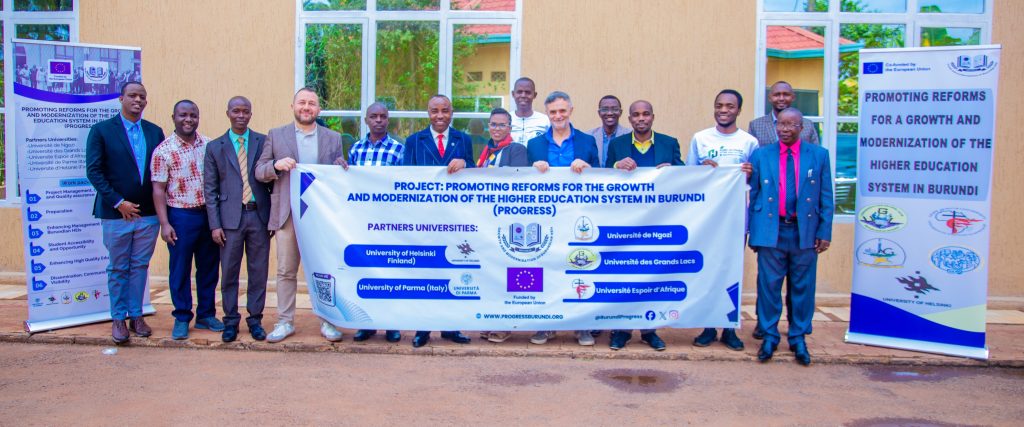
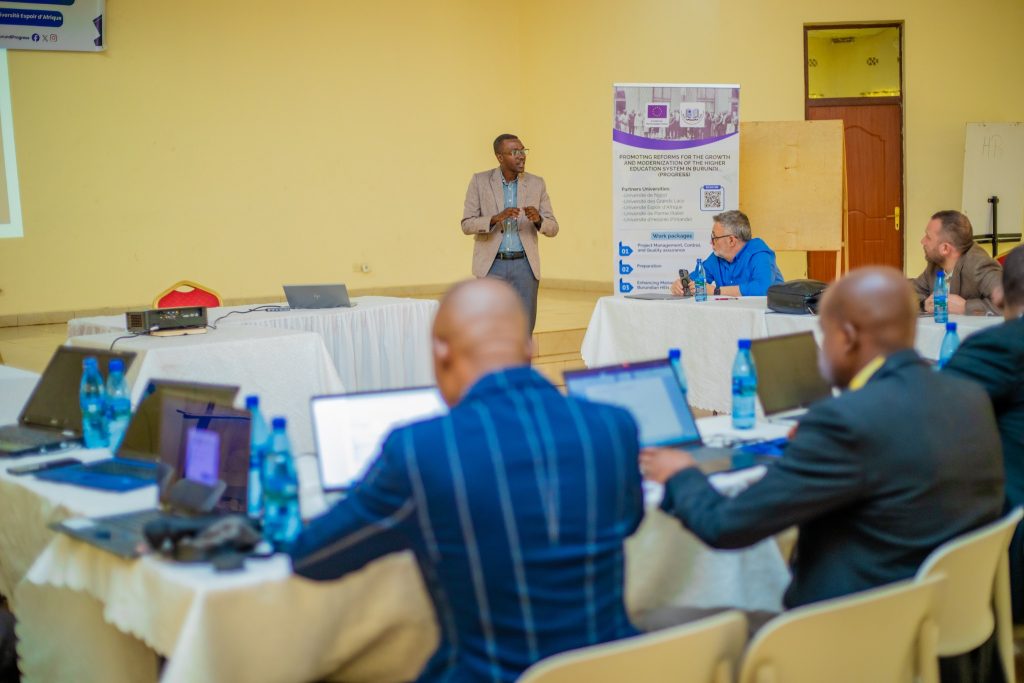
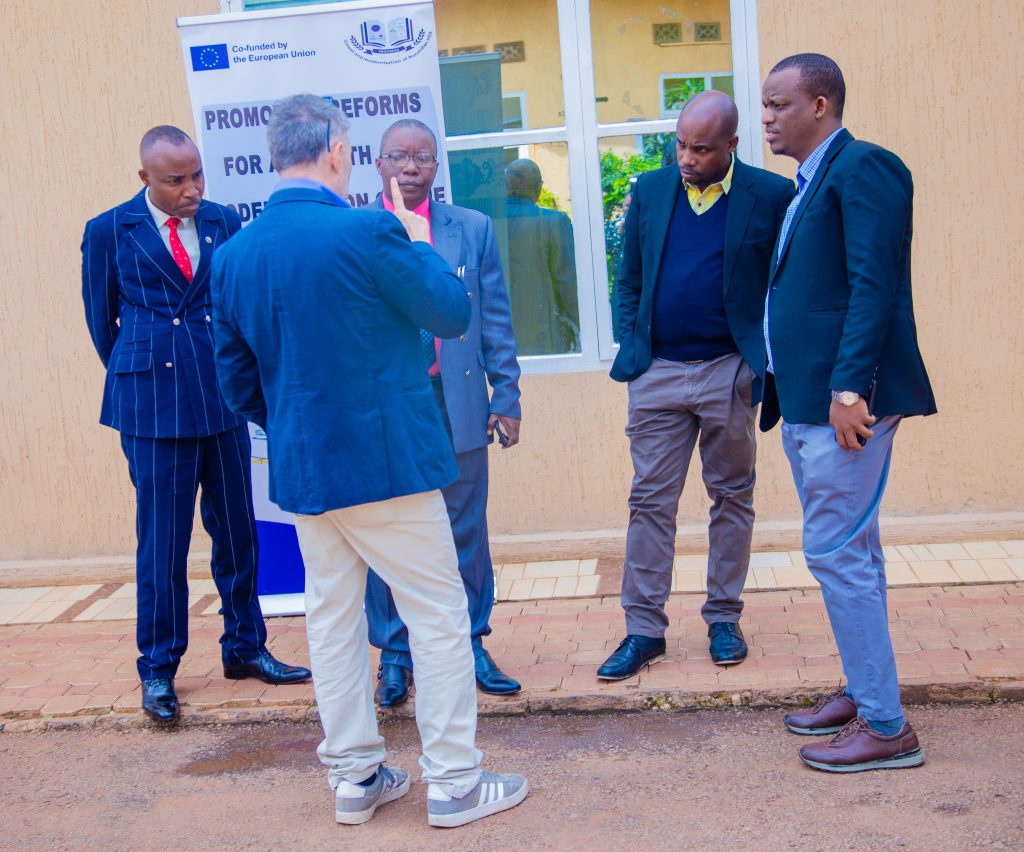
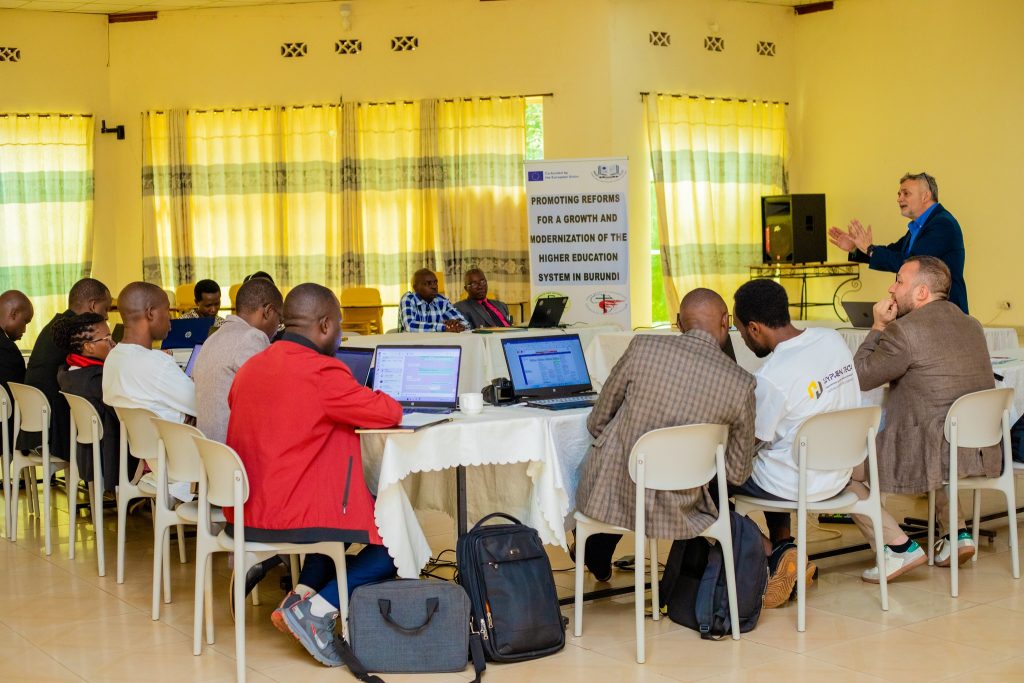
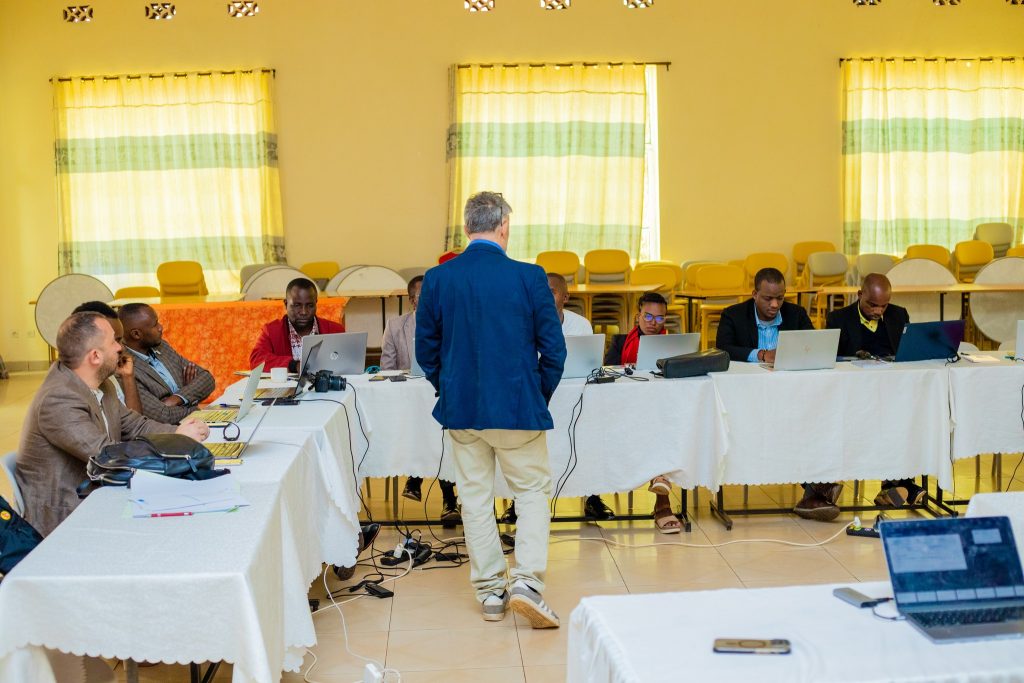
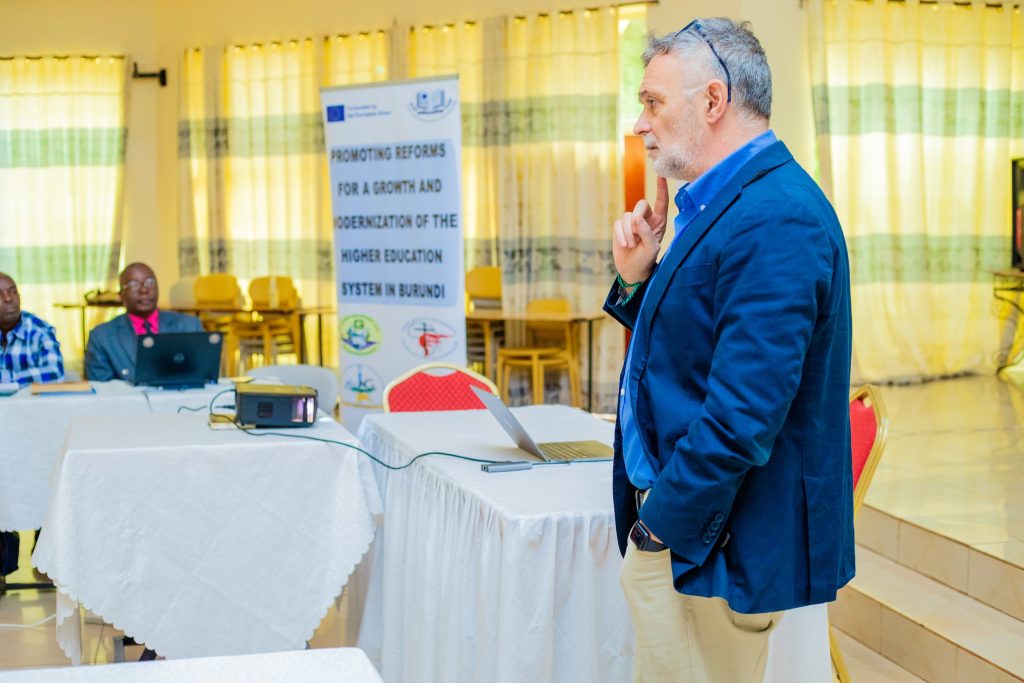
Ngozi, January 12, 2026, The second day of the PROGRESS Project workshop, hosted by the University of Ngozi within the framework of the PROGRESS Project :Promoting Reforms for the Growth and Modernization of the Higher Education System in Burundi, focused on in-depth discussions on university governance, teaching systems and institutional practices by partner universities.
Overview of the Italian Higher Education System (Università di Parma)
The morning session was led by Professor Gabriele Costantino, Project Coordinator of PROGRESS and Professor at the University of Parma, who delivered a comprehensive presentation on the structure and functioning of the Italian higher education system. He provided a system-level overview explaining how rules are defined, how institutions are evaluated, and where teaching activities are delivered.
Professor Costantino outlined the governance and disciplinary structures as follows:
Ministry (MUR): Defines the national regulatory framework for higher education;
ANVUR: Responsible for system evaluation and support for national academic qualification processes (ASN);
Universities: Autonomous institutions operating under their own statutes and internal regulations;
Departments: Responsible for hiring staff and managing teaching and research activities;
Disciplinary Structures: Recruitment and evaluation organized by scientific-disciplinary fields and competitive sectors.
This structural overview allowed participants to better understand how institutional autonomy operates within a nationally regulated framework and how quality assurance mechanisms are integrated into university systems.
Academic Roles and Teaching Organization in Italian Universities
Professor Costantino further explained how teaching responsibilities are structured. He identified three main academic roles:
Tenured Professors, including Associate and Full Professors, who teach courses, conduct examinations, supervise theses, lead research groups, and contribute to university governance;
Researchers, including structured researchers and tenure-track researchers (RTT), who combine research activities with teaching and student support, often forming a pathway to professorship;
External or Adjunct Lecturers, hired on a contractual basis to meet specific teaching needs, particularly in specialized or professional courses, under rules defined by each university.
He also presented how teaching is organized in terms of courses, credits, and academic service duties. Teaching activities typically include lectures and laboratory sessions, examinations and assessments, thesis supervision, student tutoring, office hours, and participation in academic committees and programme management.
Regarding academic workload, he explained the Credit System (CFU), where one credit generally corresponds to 25 hours of total student workload, and emphasized that universities define detailed teaching and service obligations through internal regulations.
Implementation of the PROGRESS Project by Partner Universities
The workshop continued with a presentation by Eric Nkurunziza from the Université des Grands Lacs, who shared insights into the implementation of the PROGRESS Project within his institution. He presented ongoing work related to institutional surveys assessing the current situation of higher education institutions in Burundi.
He also presented the institutional profile of the Université des Grands Lacs , highlighting its community-oriented mission.
Dr. Édouard Niyongabo, representing Hope Africa University (HAU), presented the university’s mission and achievements. He emphasized HAU’s commitment to academic excellence, research, and community development, grounded in strong ethical and Christian values. He highlighted the diversity of academic programs offered, the availability of affordable tuition, qualified teaching staff, modern facilities, and the delivery of more than 500 courses, all contributing to a supportive learning environment that fosters both intellectual and personal development.
The session concluded with a presentation by Professor Amidou Nshirimirama, representing the University of Ngozi, who shared updates on PROGRESS Project activities implemented at the institution. He outlined the assignment status and emphasized that the University of Ngozi has taken a leading role in web development and project communication, aiming to maximize outreach to student communities through digital platforms and social media. He also highlighted plans to establish a virtual laboratory for food technology programs and to improve internet infrastructure to support innovative teaching methodologies. He recalled that the University of Ngozi, founded in 1999 during the civil war, was the first private university in Burundi and now offers both undergraduate and master’s degree programs.
In the afternoon, Professor Marco Pieroni from the University of Parma delivered a presentation reinforcing Work Package 3, with a specific focus on teachers’ recruitment challenges. He identified several key issues affecting higher education institutions:
Limited mechanisms for continuous professional development, resulting in insufficient opportunities for pedagogical, digital, and scientific upgrading;
Misalignment between academic profiles and emerging labor market needs, often due to limited engagement with external stakeholders such as industry and public institutions;
Lack of standardized and transparent recruitment procedures, which may reduce trust in selection processes;
Difficulties in attracting and retaining qualified and motivated academic staff, exacerbated by inconsistent recruitment criteria and timelines across institutions.
Professor Pieroni then presented good practices in teachers’ recruitment, emphasizing the importance of defining competence-based academic profiles aligned with institutional needs. He stressed that recruitment should be based not only on formal qualifications but also on teaching skills, research capacity, and professional experience.
He also highlighted internationalization as a strategic lever, noting its role in enhancing education quality through the adoption of English as a working language, facilitating student and staff mobility, strengthening global partnerships, and increasing international recognition of academic qualifications.
The workshop concluded with closing remarks delivered by the Vice Chancellor of Hope Africa University, who expressed sincere appreciation to Professors Gabriele Costantino and Marco Pieroni from the University of Parma for their leadership and facilitation of the workshop. He also thanked the representatives and participants from the three Burundian partner universities, University of Ngozi, Université des Grands Lacs, and Hope Africa University for their active engagement and collaborative spirit.